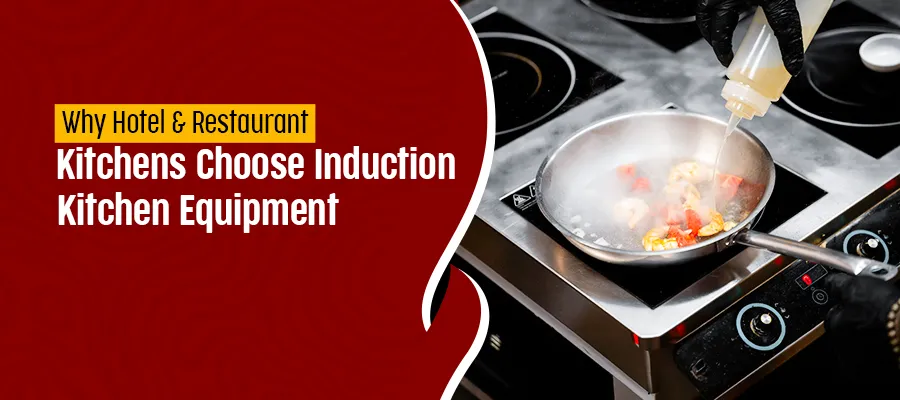
Why Hotel & Restaurant Kitchens Choose Induction Kitchen Equipment
April 25, 2026Walk into any modern hotel or restaurant kitchen and you will notice a shift happening. Induction equipment is replacing gas burners. Not in small cafes experimenting with new technology. In serious commercial operations running hundreds of covers daily.
This isn't about trends. Hotels and restaurants base their decisions on how cost-effective, efficient, and reliable the equipment is. Induction stoves have an advantage as they actually solve some problems.
Operational Savings
Gas burners are inefficient. The heat from the flame warms the cooking pot, air surrounding it, the stove's top, and everything else. About half your fuel bill goes toward heating things that are not food.
Induction directs 90 percent of energy straight into the cookware through electromagnetic fields. Nothing else heats up. Your monthly energy costs drop by 30 to 40 percent. Not once. Every single month.
A hotel running multiple kitchens sees these savings multiply across every outlet. The breakfast kitchen, banquet operations, room service, specialty restaurants. Each one cutting energy costs substantially. Over a year, the numbers become significant.
Kitchens People Can Actually Work In
Gas cooking turns kitchens into blast furnaces. By midday, the heat becomes brutal. Cooks work in constant discomfort. Productivity suffers. Mistakes increase. Staff leave for jobs with better conditions.
Hotels struggle enough with kitchen staff retention without making the environment unbearable. Induction produces minimal ambient heat. The cookware heats but the surface and surrounding air stay relatively cool. Kitchen temperatures drop noticeably.
Cooler kitchens mean staff maintain energy through double shifts. Focus stays sharp. Retention improves. Finding experienced kitchen staff is hard. Keeping them matters.
Speed During Service Rush
Hotels face unique pressure during service. Breakfast buffets need constant replenishment. Banquets serve hundreds simultaneously. Room service orders come unpredictably. À la carte restaurants handle varied tickets.
Induction heats faster than gas. Water boils quicker. Stocks reduce sooner. Sauces thicken in less time. Dishes cooking 20 to 30 percent faster means higher throughput when it matters most.
During breakfast rush, that speed keeps buffet stations stocked. During banquet service, it helps multiple dishes hit the pass simultaneously. For room service, it cuts ticket times. Speed translates directly to better guest experience.
Consistency Across Properties
Hotels with multiple properties face a consistency challenge. Dishes should taste identical whether guests eat at your Bangalore location or Mumbai outlet. Gas cooking makes this difficult. Flame characteristics vary. Gas pressure fluctuates. Experienced cooks compensate, but results vary.
Induction provides digital temperature control. Set 180 degrees and the system maintains exactly that. No fluctuations. No adjustments needed. Your dal makhani simmers at identical temperature in every kitchen. Your chocolate desserts set properly regardless of which pastry chef is working.
This consistency matters for brand reputation. Guests expect the same quality across all properties. Induction helps deliver that.
Safety in High-Volume Operations
Hotels operate kitchens 18 to 24 hours daily. Multiple shifts. Varied staff experience levels. Fatigue during late shifts. All these factors increase accident risk.
Gas means open flames, leak hazards, and burn risks. These dangers require constant vigilance. Accidents still happen. Burns from hot surfaces. Fires from forgotten burners. Gas leaks requiring evacuation.
Induction eliminates open flames. No gas leak risks. The cooking surface cools within seconds of removing cookware. Burn injuries drop. Fire hazards reduce substantially. Insurance costs may decrease.
In hotels where kitchen operations never stop, safety improvements have real value.
Maintenance That Does Not Halt Operations
Hotel kitchens cannot shut down for maintenance. Guests expect food 24 hours daily. Gas equipment requires regular maintenance. Burners clog with grease and carbon. Igniters fail. Nozzles need cleaning. Parts require replacement.
This maintenance often requires equipment shutdown. During service hours, that creates problems. Off-hours maintenance means paying premium labour rates.
Induction surfaces are smooth and flat. Spills wipe clean easily. Minimal moving parts mean less can break. Maintenance requirements drop dramatically. Equipment stays operational longer with less intervention.
Flexibility for Different Cuisines
Hotels often run multiple restaurant concepts. Indian fine dining. Continental breakfast buffet. Chinese specialty restaurant. Bakery operations. Each requires different cooking techniques.
Restaurant operators sometimes worry induction cannot handle certain styles. High-heat wok cooking. Tandoor-style preparations. Traditional techniques requiring visible flames.
Modern commercial induction equipment handles diverse cooking styles effectively. High-power units manage wok cooking. Specialised equipment replicates tandoor heat characteristics. The adjustment period exists but chefs adapt quickly.
Sabari Kitchen, manufacturing commercial equipment in Coimbatore for three decades, designs induction solutions for varied applications. From bulk cooking vessels for banquet operations to specialised units for live counters, their equipment handles traditional and modern techniques.
Infrastructure Planning
Hotels that plan to establish new hotels or undertake renovations must make decisions about infrastructure. Natural gas needs pipes, ventilation systems for combustion, and safety checks on a regular basis. The lack of natural gas lines makes installation difficult and expensive.
Induction requires adequate electrical capacity. Older properties may need electrical upgrades. This represents an infrastructure investment.
However, electrical infrastructure often proves simpler than gas installation, particularly in high- rise buildings or locations with limited gas supply. Each situation differs but induction frequently simplifies construction planning.
The Business Case
Quality commercial induction equipment costs more upfront than comparable gas equipment. This is fact. But hotels calculate total cost of ownership, not just purchase price.
Energy savings over equipment lifespan. Reduced maintenance costs. Improved staff retention. Faster service capability. Enhanced safety. Better consistency across properties. These factors combined often justify the initial investment within two to three years.
With Sabari Kitchen, the hotels and restaurants choosing induction are making calculated business decisions. The technology delivers measurable operational improvements that impact the bottom line month after month.