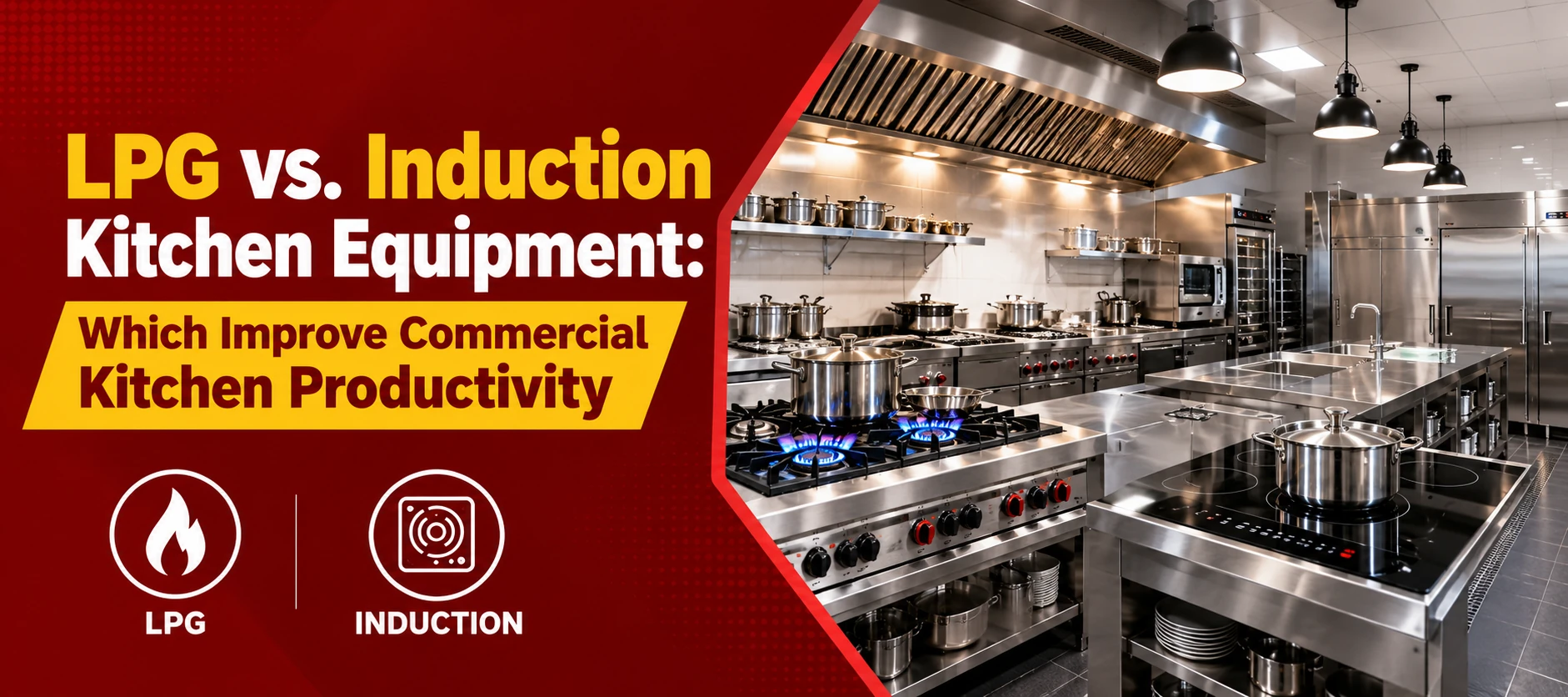
LPG vs. Induction Kitchen Equipment : Which Improve Commercial Kitchen Productivity
Sep 29, 2026As we all know, in a commercial kitchen, every minute matters! Whether it is a restaurant, cafe, hotel, or canteen, the kitchen operation is continuous. The cooking equipment affects multiple attributes such as cooking speed, energy consumption, kitchen safety, cleaning, etc.
Over the years, LPG has been a common choice for commercial kitchens. Now, the induction kitchen is taking over and becoming an alternative because of its efficiency, precise temperature control, cleaner operation, and safety.
So, when comparing LPG and induction, which improves commercial kitchen productivity? Let’s take a closer look.
What is LPG Kitchen Equipment?
LPG stands for liquified petroleum gas. Commercial LPG stoves, burners, ranges, and heavy-duty cooking equipment are commonly used for a variety of food preparation. Cooking with LPG is done by applying the flame directly to the cooking vessel.
The heat produced by the fuel can be regulated using the burner control mechanism, which gives the user the ability to increase or decrease the heat based on the specific cooking need. The use of LPG is especially suited for intense cooking and cooking of larger quantities of food while providing an open flame and additional heat to the kitchen.
What Is an Induction Kitchen Equipment?
Instead of producing a flame, it uses electricity and electromagnetic energy to heat the vessel directly. The induction system creates heat within compatible cookware. This feature is what makes induction cooking differ from cooking with gas.
The direct transfer of heat allows induction equipment to provide fast and controlled cooking. Induction cooking has many applications in the kitchen such as boiling, sautéing, warming, frying, making sauces, and many others. Due to this, Induction cooking units greatly contribute to modern commercial kitchens.
Induction Offers Better Heat Efficiency
One of the biggest advantages of induction cooking is how energy is utilized. In the case of LPG, heat from the flame leaks out from the sides of the vessel. That means not all of the energy generated is consumed for cooking. Induction does not waste any heat in its process, implying that everything heats up the cookware directly. Effective energy use is especially important in a commercial kitchen, as it turns into serious savings over time.
Faster and More Controlled Cooking
Speed plays an important role in commercial kitchens during the rush service time. Induction appliances heat the cookware quickly and give chefs the opportunity to control power levels precisely. This is helpful for the desired cooking temperature to be maintained. For example, the chef might reduce the heat quickly when making a sauce. This can help with overcooking prevention and consistency. LPG also offers adjustable heat, but induction provides a more controlled and responsive cooking experience in many applications.
A Cooler Working Environment
Commercial kitchens can become very hot, especially when there are several LPG burners in use at the same time. The presence of an open gas flame leads to a release of heat into the surroundings. This, in turn, will increase the temperature levels in the kitchen and create unfavorable working conditions. Since the induction stove heats the vessel and does not use a flame to transfer heat, it doesn’t release unwanted heat into the kitchen. This allows for the creation of a working environment that is more pleasant for chefs and employees.
Improved Kitchen Safety
Safety is a significant issue in commercial kitchens. LPG systems depend on an open flame and require proper connections, ventilation, and inspections. Gas leaks and improper operation can create hazards. Unlike traditional flame cooking methods, induction does not involve flames or the burning of gas. This avoids certain unsafe aspects of such cooking. An induction cooktop does not become the primary heat conductor as a conventional burner does. Like any equipment designed for commercial use, induction devices should be installed properly and used according to guidelines.
Easier Cleaning and Maintenance
Commercial kitchens need to be cleaned frequently, and equipment design can make this task easier or harder. Regular LPG burners come with multiple parts, including burners and grates, that allow for food residue and grease build-up. Multiple induction cooking units, however, are built with smooth and flat cooking surfaces that can simply be wiped down after use. This can save time on cleaning and help make the maintenance processes in the kitchen less complicated. When less time is spent, workers in the kitchen can use their time on food preparation and service.
Better Temperature Control
Proper temperature is essential in order to ensure food quality. The equipment based on induction technology usually has a selection of different power levels and temperatures to choose from. This is especially important in case of gentle cooking processes, because too much heating can seriously spoil product quality. The precision of temperature control also makes it possible to repeat recipes with great accuracy.
Final Thoughts
Of course, LPG has been a trusted cooking fuel for commercial kitchens for many years. But as restaurants and food businesses focus more on energy efficiency, safety, cleanliness, temperature control, and productivity, induction cooking is gaining popularity. Induction is not simply a substitute for LPG.
It is an updated approach to cooking that features proper control, effective heat transfer, simple cleaning, and more comfortable working conditions. For commercial kitchens looking to improve their day-to-day operations, investing in the right induction kitchen equipment can help create a faster, cleaner, safer, and more efficient workspace.
If you are looking for the best and most trusted induction kitchen equipment, contact Sabari Kitchen Equipment. They specialize in equipping kitchens with high-performance solutions for everyday kitchen demands.