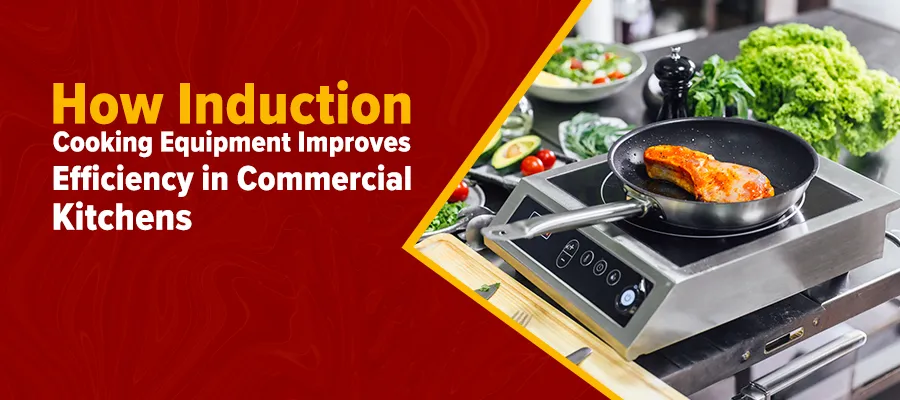
How Induction Cooking Equipment Improves Efficiency in Commercial Kitchens
May 30, 2026Commercial kitchens operate under constant pressure. Orders pile up. Service windows compress. Staff work longer hours. Equipment either helps solve these problems or makes them worse.
Induction cooking equipment fundamentally changes how kitchens operate. Not just at the stove level but across the entire kitchen workflow. Efficiency gains ripple through every aspect of production.
Speed Transforms Service
Induction heats faster than gas. Water boils quicker. Stocks reduce sooner. Curries reach temperature in less time. During lunch rush when orders queue up, those minutes matter enormously.
A kitchen using gas burners struggles during peak service. Cooks wait for water to boil. Wait for oil to heat. Wait for pans to reach temperature. Those waits compound. A 15-minute ticket becomes 20 minutes. Orders back up. Tables wait.
Induction cooking cuts these delays. Faster heating means faster service. You push orders through quicker with the same staff. Higher throughput without expanding capacity.
A restaurant handling 100 covers at lunch takes less total time with induction. That means earlier table turns. More covers served. Better revenue per shift.
Energy Consumption Drops
Gas cooking consumes enormous amounts of energy to heat the air in kitchens. In comparison, induction transfers close to 90 percent of its energy directly to the cooking utensils. The savings will be reflected in your bills instantly.
Energy bills are reduced by 30 to 40 percent every single month. This is not just for one month but every single month throughout the years. A hotel kitchen consuming 40,000 rupees worth of gas per month will end up paying just 24,000 to 28,000 rupees using induction. Food costs stay the same. Labour costs remain stable. But energy costs drop. That flows directly to profitability.
For multi-outlet hotels, these savings multiply. Breakfast kitchen, banquet kitchen, room service kitchen, specialty restaurants. Each one cuts energy consumption. The total becomes substantial.
Kitchen Space Works Better
Induction equipment comes in compact designs. A single induction unit replaces multiple gas burners while occupying less space. Modular layouts allow flexible kitchen design.
Better space utilisation means more efficient workflows. Cooks walk less distance between stations. Movement becomes more logical. Transition time decreases. Productivity increases.
Tight kitchens using every inch benefit most. Induction equipment lets you do more in the same footprint. For hotels expanding without relocating kitchens, this matters significantly.
Temperature Control Improves Everything
Gas burners give limited control. Experienced cooks compensate through skill but consistency suffers across shifts. Different cooks, different results.
Induction provides precise digital temperature control. Set 180 degrees and the system maintains exactly that. No fluctuation. No guesswork.
This consistency improves quality. Milk-based desserts set properly every time. Sauces emulsify correctly. Rice cooks uniformly. Sambar simmers at exactly the right heat whether the head chef or junior cook is working.
Quality consistency builds reputation. Guests order items knowing they will taste identical to previous visits. Repeat business increases. Reviews improve.
Staff Productivity Increases
Induction kitchens run cooler than gas kitchens. Ambient heat reduces substantially. Staff maintain energy through long shifts. Fatigue sets in later. Mistakes decrease.
Cooks working in comfortable conditions make fewer errors. Speed increases naturally. Focus stays sharp. Productivity improves without harder work.
Retention improves too. Staff prefer working in cooler, less demanding environments. Turnover decreases. Training burden reduces. Institutional knowledge stays with the team.
Equipment Reliability Improves Service
Gas equipment requires regular maintenance. Burners clog. Igniters fail. Parts need replacement. Often this maintenance requires equipment shutdown.
Induction equipment has minimal moving parts. Maintenance needs drop dramatically. Equipment stays operational longer. Unexpected breakdowns decrease.
Reliable equipment means consistent service. Kitchen never shuts down unexpectedly. Menus run as planned. Guest experience stays positive.
Consistency Across Outlets
Multi-outlet operations struggle with consistency. A dish prepared at one location should taste identical at another. Gas cooking makes this difficult. Different equipment, different pressure systems, different water supply.
Induction equipment maintains identical performance everywhere. Same temperature control. Same heat delivery. Food quality becomes truly consistent across locations.
Guests expect this. Franchise models demand it. Induction makes it achievable.
Faster Service During Events
Banquets and events require pushing hundreds of plates simultaneously. Gas equipment gets overwhelmed. Orders bunch up. Plating delays compound. Service slows.
Induction equipment handles banquet volumes without stress. Multiple dishes cook simultaneously at precise temperatures. The pass keeps moving. Service runs smoothly even at high volume.
This capability lets properties bid on larger events. More business. Higher revenue.
Total Kitchen Efficiency
Induction equipment improves efficiency at every level. Faster cooking times reduce order cycle. Lower energy costs improve margins. Cooler kitchens improve staff productivity. Better temperature control improves quality. Less maintenance means more operational time.
The cumulative effect transforms kitchen performance. The same staff produces more output. Quality improves. Guests have better experiences. Margins improve.
Sabari Kitchen manufactures commercial induction equipment designed for Indian kitchen operations. From bulk cooking vessels to specialty units, their equipment handles traditional preparations and modern techniques.
Switching to induction is an investment in kitchen efficiency. The benefits extend throughout the operation, improving profitability and service quality simultaneously.